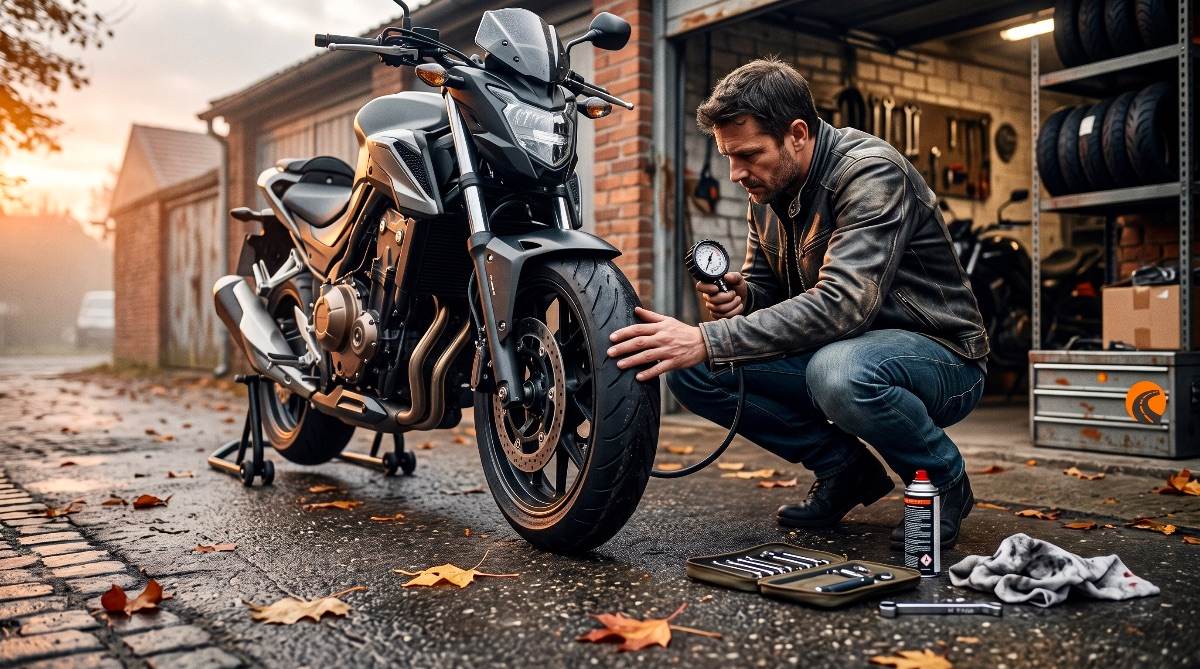
Motorcycle tires in autumn: pressure, wear, and when to change them
Discover how to adapt your tire pressure to the cold, understand operating temperature, and detect wear before the rains arrive.
Summer is saying goodbye and it's time to shift your biker mindset. The days are getting shorter, temperatures are inevitably dropping, and the first rain showers are making an appearance. It is precisely during this transition period that the maintenance of your ride becomes critical, and understanding how autumn motorcycle tires behave can make the difference between enjoying a spectacular route or getting a good scare at the first shaded corner.
At MotoCorner, we know that passion doesn't understand seasons, but physics does. Cold asphalt, accumulated humidity, the dreaded dry leaves, and the first rains completely change the rules of the game. If you want to continue enjoying your autumn routes in Spain with total peace of mind, you need to pay extra attention to the only element that keeps you glued to the ground: your tires.
Why do your motorcycle tires suffer more in autumn?
Your motorcycle's wheels are designed to offer maximum performance within a specific temperature range. During the summer, the heat of the asphalt itself does most of the work, helping the compound reach its sweet spot in just a couple of kilometers. However, in autumn and winter, the tire faces a hostile environment.
On one hand, the drop in the thermometer hardens the rubber compound, which translates directly into a loss of initial grip. On the other hand, the presence of humidity and dirt on the roads requires the tire tread to work overtime to evacuate water. If your wheels are not in optimal condition, it is time to learn how to master wet asphalt on a motorcycle starting, of course, by fitting the right tires.
The correct pressure: the cold betrays you
One of the most common mistakes when the season changes is forgetting to check pressures. Remember that perfect check you did in August at 35 degrees in the shade? Well, I'm sorry to tell you that with the arrival of 10-degree mornings, that pressure has plummeted.
The air inside the wheels compresses with the cold. This means that if you don't inflate your tires again, you will be riding with lower pressures than you should. Riding under-inflated causes irregular wear, makes the bike feel heavy and clumsy when entering a curve, and increases fuel consumption. In the long run, this affects your pocket and forces you to do more math when calculating your fixed motorcycle expenses.
What pressure to use during this time?
There are no universal magic numbers or bar tricks here. Always trust what the manufacturer of your motorcycle indicates in the user manual or on the sticker usually located on the swingarm or under the seat. Those figures have been tested by engineers to ensure the best contact patch.
Remember to always check the pressure when cold (having ridden less than 3 kilometers) and with a reliable pressure gauge. If you are going on a trip with a passenger or luggage, adjust that pressure to the load by strictly following the tables in your manual.
Working temperature: warming up tires with care
As we mentioned, in autumn the rubber is cold and hard when starting. Demanding 100% grip from the first traffic light or the first roundabout is buying a ticket for a fall.
The first kilometers of your route should be for acclimatization. Accelerate smoothly, brake progressively, and avoid sharp leaning. In autumn, 'touring' or sport-touring tires have an advantage over hyper-sport compounds, as the former contain a higher percentage of silica. This chemical compound allows the wheel to reach its optimal operating temperature much faster in cold and rainy conditions.
Wear indicators, DOT, and crystallization
If you have checked the pressures and are careful when warming up, the next step is to verify the physical condition of your autumn motorcycle tires.
1. The tread and wear indicators
The law requires a minimum tread depth of 1.6 millimeters (essential to successfully pass the inspection, so we encourage you to read how to prepare your motorcycle for the ITV). However, pushing it that far in autumn is reckless. With less than 2 millimeters, the water evacuation capacity plummets, multiplying the risk of aquaplaning. Look for the small rubber blocks (indicators) at the bottom of the grooves; if the tread is at their level, it's time for an urgent change.
2. The dreaded DOT and the age of the rubber
The DOT code stamped on the tire sidewall tells you when it was manufactured. The last four digits represent the week and the year (for example, '3421' means week 34 of the year 2021). Although tires don't expire like yogurt, after 5 years from their installation, the compound begins to lose its elastic properties, especially if the motorcycle sleeps on the street.
3. Crystallization
An old tire may have all its tread intact, but if you run your fingernail over it and it's hard as wood, or if you see small cracks on the sidewalls, it is crystallized. Crystallized rubber on cold, wet asphalt slips like ice. This is a vital point if you are about to evaluate a used motorcycle that has been sitting for a long time.
Find your trusted workshop and spare parts
If after doing this check you detect that your tires have had enough, it is time to be advised by professionals. Don't risk it by mounting just anything, and don't trust your safety to inexperienced workshops.
If you are in the north, in Bizkaia you have excellent options: you can take your machine to the experts at Motos Alex Sport for a tire change and comprehensive tune-up, or look for specific parts for your winter project at Kit Moto Recambios. If you are in Álava, the mechanics at Motos Tapia will take care of leaving your ride perfect for the northern climate.
Do you live in the south? In Almería, you won't lack specialists: you can go to the Motos Matilla dealership for official service, purchase technical components at Recambios Estrada, or stop by the legendary Enzomoto if what you need, in addition to tires, is winter equipment and accessories. Likewise, if the route or your daily routine finds you in the neighboring province, the team at Tecnomoto Córdoba will perform the inspection and tire change with a full guarantee.
And of course, if you ride through Catalonia and are looking to equip yourself against the cold with high-quality accessories while managing your wheel change, be sure to visit the professionals at Automoto ilvi in Barcelona.
Conclusion
Riding in autumn is a real joy if done with a clear head. The landscapes are unbeatable and the roads are usually less crowded. To enjoy this experience, make sure the pressure is correct according to the manual, warm up the tires with care on every outing, and don't stretch the useful life of your tires if the tread is fading or the compound has hardened over the years.
The asphalt does not forgive, but a well-maintained motorcycle is your best life insurance. Check everything today, prepare your winter gear, and above all, don't let your wheel maintenance be overlooked. Note the change in My Garage to keep the entire history of your riding companion up to date!
Este artículo y su imagen se han elaborado apoyándose en la inteligencia artificial y siendo revisados por el equipo de MotoCorner antes de publicarse. Las imágenes son ilustrativas y pueden no corresponder a modelos o piezas reales.